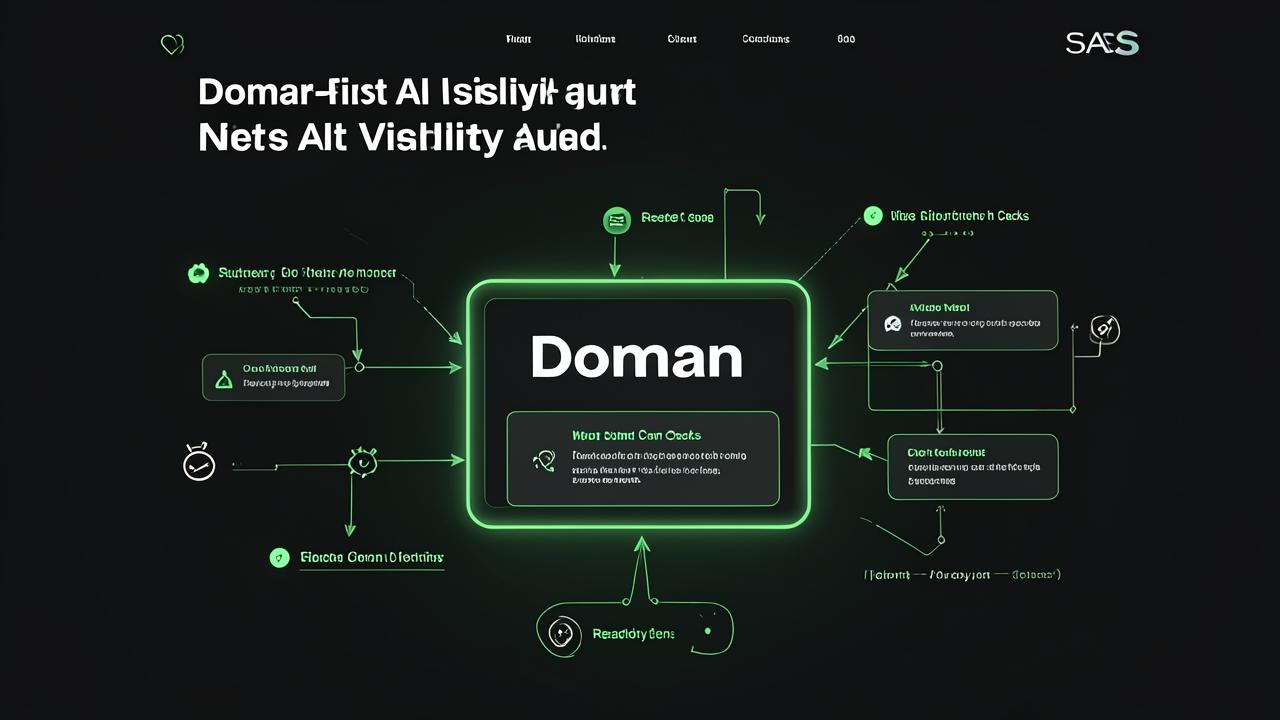
An AI visibility audit should start with the domain. Before asking users to describe their business across twenty fields, a tool can read the public information already available: what the brand sells, who it serves, which pages exist and which signals it gives search engines and assistants.
What this audit should answer
A complete review must answer four questions:
- Can a machine access the important content?
- Can it clearly understand who the brand is and what it offers?
- Can it find concrete, citable answers?
- Which competitors already occupy that space in observed answers?
The technical audit and mention check are separate layers. The first evaluates readiness; the second observes results in external assistants.
Layer 1: access and crawling
Check response codes, internal links, robots.txt, sitemap, canonicals and crawler blocks. Relevant pages must be public and their main content should not depend entirely on an interaction that prevents reading.
An llms.txt file may add context, but it cannot compensate for an inaccessible website or guarantee a mention.
Layer 2: entity and consistency
The brand should communicate its name, category, proposition, audience, location and contact details consistently. The audit compares those signals across titles, headings, primary copy, structured data and company pages.
When a company uses a different description everywhere, ambiguity rises and systems struggle to connect it to a specific query.
Layer 3: citable content
A citable page answers directly, attributes its data and makes freshness clear. Pricing, methodology, limitations, comparisons, authors and real examples are more useful than vague promotional claims.
The review should flag unanswered questions, generic copy, missing dates and shallow key pages.
Layer 4: structured data and trust signals
Organization, Product, SoftwareApplication, Article or BreadcrumbList can clarify relationships when they match visible content. Do not add markup for information that does not exist or use FAQPage indiscriminately.
Authorship, policies, contact details, team information, terms and commercial consistency also matter.
Layer 5: queries, mentions and competition
The category and use cases detected on the domain can seed an initial question set. Querying assistants then reveals whether the brand appears, its position, recommended rivals and cited sources.
That result does not replace the audit; it validates it. A site may be technically ready but lack external authority, or appear because of old information despite a weak current website.
How to prioritise improvements
Order findings by impact, effort and dependency:
- First: blocks, errors and contradictory definitions.
- Next: pages required to answer commercial intents.
- Then: structured data, internal links and formatting improvements.
- In parallel: presence in external sources already being cited.
Every recommendation should state what to change, where and how to verify the outcome. A score without an action plan adds little value.
What AskBrandly delivers
When a brand is added through its domain, AskBrandly reviews public information, summarises readiness and perception, proposes questions and prioritises actions. The user then decides when to use included scans or credits to check real mentions across available assistants.
This separates what can be analysed automatically from the domain from what requires querying external models. Continue with Share of Model, AI competitor analysis and brand perception in AI answers.